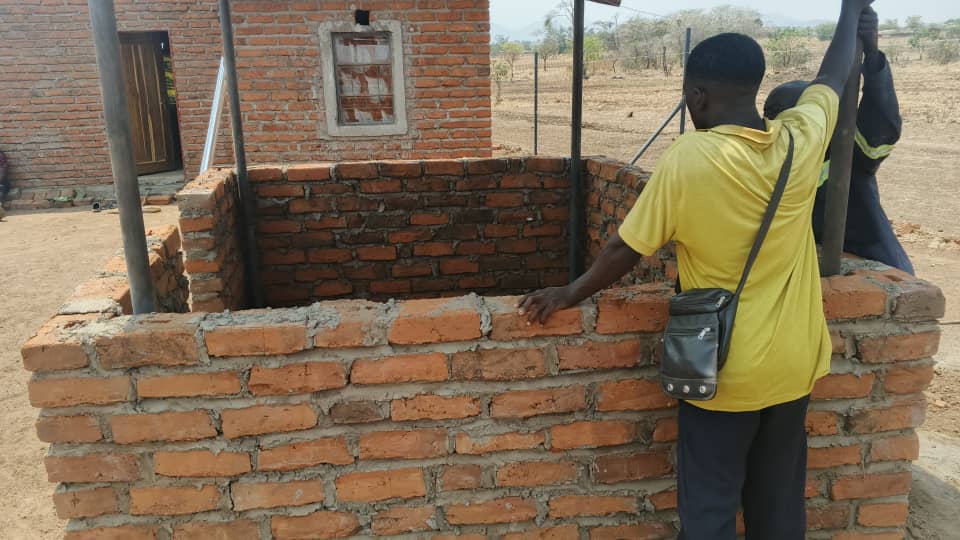
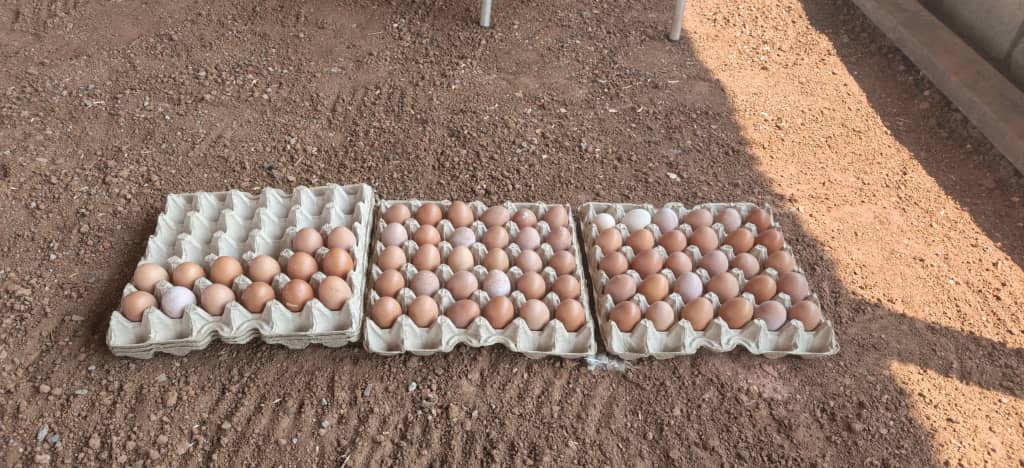
We sent funds just this week to our church communities across Zambia, and today's pic came in just this morning from one in rural Chipata. To be as efficient as possible, this church community was provided with 96 - 50kg bags of maize after the harvest a year ago. Here is how the math works: if we divide those 96 bags out to cover 12 months, that means they can use 8 bags each month; we then use one bag for four families to receive around 12kg, so this church community has been impacting 32 families each month since then. We spent most of the funds to care for these families up front with our harvest donations. The shelled maize is stored somewhere in the community, often inside the church itself. Then on a monthly basis we provide a very small amount so that each family can take their maize and get it ground so it can be turned into nshima for their meals.
The 2026 harvest is starting right now, and our May funding anticipated this. It will be a HUGE focus for our team for the next two months. So far:
1) The wire included funds to buy empty 50kg sacks for our rural input recipients. One more way we are trying to build into their deficit economic situation. It also included funds to get started buying some recently harvested Zambian maize. We have barely started this effort but expect to have more to report weekly from this point.
2) While we expect to spend much of our time purchasing from our small, rural farmers in order to build them up AND rebuild our maize stores, our first two buys were bulk purchases from two much bigger growers who came forward and offered to sell us at what seems to be a great price for a bulk purchase. I mentioned one such purchase in last week's update, and we had a second grower come forward with a similar amount. These purchases are somewhere in the range of 10 times what we are expecting from our vulnerable input recipients.
3) We haven't heard what the government price for maize will be set at this year yet, so we have had lots of discussions, both among our internal team and involving some of our rural partners. We keep learning! I no longer am of the understanding that our rural input recipients would have ever been good candidates to sell to the government. They more than likely would have kept much of what they grew and maybe sold some in their local markets. This probably means we paid them well above the market value each year for the last 4 years. That could be a source of frustration, since that would have limited our maize available to share in the church distribution centers. But we are definitely NOT frustrated with that. Our goal is to LOVE our Zambian brothers and sisters as Jesus taught by SHARING from our SURPLUS into their DEFICIT. We have done that, and I can assure you none of those beautiful brothers and sisters were raised out of their deficit because we paid them a few dollars more than we could have. That said, we are NOT waiting for the government number to get started buying, so we have spoken with our internal and external partners and come up with an initial price for maize that is reduced by enough under last year's price so as to offset much of our lost purchasing power related to the change in the dollar exchange rate. Our goal is to continue to be fair with the small rural growers from whom we expect to buy most of our maize while getting it at a price that allows us to purchase the maximum volume for the coming feeding program.
4) Here in America, we have now collected just over $105,000 towards this effort, and we believe we will receive another $15-20,000 over the coming weeks. As I run those ever-changing estimates through a spreadsheet I have set up to plan and then monitor our harvest program, I believe this should be enough funding for us to slightly surpass our current harvest-based portion of the monthly feeding program starting in July. Stay tuned as those estimates turn into reality over the next two months.
What's next?
1) We are planning THIS WEEK to send funding to each church that had growers receive inputs from S2S for empty sacks for the input recipients. The sacks themselves are not very expensive, and we have estimated as best we could, based upon the number of input recipients from each distribution center and our best estimate of yield per grower.
2) Once they have the empty sacks, over the coming weeks those growers will harvest and fill those sacks. As I have likely said in past blog posts, we expect those small growers to contribute a couple of bags back to the church in repayment for the inputs they received, then keep three or more bags for their families to enjoy over the coming 12 months, and finally to sell to us however many they want to sell.
3) As we are buying, we are hoping to accumulate data for each of these small growers' yield so that we can track their improvements over time based upon their embracing and fully implementing the improved methods Tracy brought to their trainers during the growing season a year ago. For a spreadsheet nerd like me, all of these numbers are SO MUCH FUN!!
4) The first week of June I expect to send over however much funding we have collected at that point and the buyers in Zambia will have a VERY busy month. I just spent several more minutes lost in my spreadsheets trying to figure out how best to match up the expected harvest acquisitions available and the church communities with whom we partner for monthly feeding distribution. It is going to be crazy! (Sorry Zambia team!!)
Maybe that is enough of the harvest process for this week. Let me try something I don't always do here. I know there are PRAY-ERS among our readers, both in America and Zambia. Some thoughts to consider:
Check out this text from the scriptures:
Matthew 9:35-38 - And Jesus went about all the cities and villages, teaching in their synagogues and preaching the gospel of the Kingdom and healing every disease and infirmity. And seeing the crowds, he was moved inwardly with compassion for them, because they were in distress and cast down, like sheep having no shepherd. Then he says to his disciples, "Indeed the harvest is abundant, but the laborers few; Pray to the Lord of the harvest, therefore, that he may send forth laborers into his harvest."
In my evangelical upbringing this was typically interpreted to be a verse about the assumed MISSION - which was about a rescue from hell and life eternal. What if this "gospel of the Kingdom" mentioned in the text was at least as much about how we live our lives here on earth as it was about something beyond this earth? What if the "compassion" Jesus had "for them, because they were in distress and cast down" was about the struggles of THIS LIFE? If we interpret this text in that way, this prayer for "laborers" might be a prayer for those who can in some way bring what they have (like their economic surplus) to bear in compassion for those less fortunate. Wrestle with that for a minute and then pray as you see fit.
In the specifics of our efforts, after you have prayed for laborers, please remember:
The six amazing guys we have coordinating all of this effort in Zambia. This is, no doubt, their busiest time of the year each year.
Maybe include me in there, as I do my best to create a program that is as manageable as possible for the team.
The trainers, many of whom are also pastors, as they continue to help us with the process.
The 100+ pastors and leaders of the church communities who will be helping us acquire and then manage the harvested maize over the coming months.
The 400+ trained growers who received inputs last winter and will be our primary acquisition targets. Pray that their efforts have yielded results beyond their wildest imagination, so they won't forget what they have learned for the coming growing seasons.
The 6,000+ trained growers who did NOT receive inputs last winter. Hopefully the majority of them were able to plant something so they could practice what they learned, and hopefully they have also seen terrific results, and will be able to better feed their families and sustain a growing program in the future.
The 6,000,000 Zambian people - young and old - who struggle to find enough food to eat every day. That's a big number. It's a big deal. Can we be like Jesus, and have compassion for them? If we do, what will that look like? More than just a prayer?
At this point I believe a goal of having a feeding program that impacts more than the 3,300+ households we have been impacting since the last harvest is within reach. I haven't always thought that. Maybe a prayer of THANKS is in order as well. Thanks for considering your part. Love.