Once again, I prepare a Sunday update with a picture of a small group of our Zambian brothers and sisters receiving some life and dignity giving food. Simply put, it's what we do. Yes, we have two different amazing and well-educated agronomy experts with whom we have partnered to educate these same brothers and sisters in ways intended so they can eventually live better lives without our help. But even those partnerships are ultimately intended to love and lift up the very people we are feeding. It just feels so basic to the message of LOVE Jesus seems to have brought to us 2,000 years ago.
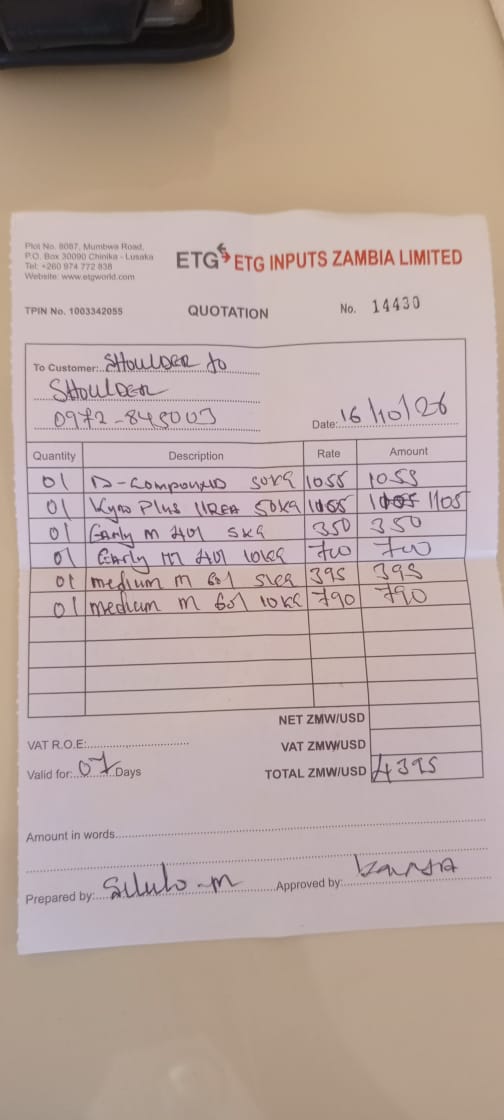
This week we sent $30,000 on top of our normal monthly budget to get started on the program to provide seed and fertilizer to as many of our destitute brothers and sisters as possible. This will be the SIXTH time we have done something like this. And I hope we continue to get better at both finding the right people to help and providing the right inputs to start to make a difference in their lives. Six years ago, I knew even less about growing corn than I do today. And I am still certainly NOT any sort of expert. One thing I have learned is that all grower training is not created equal. Another thing I have learned is that hybrid corn varieties should not be replanted from kernels produced by them (aka recycled kernels). I certainly don't understand that. Tracy does. I do not. I trust Tracy. One of the changes we are considering making this year is to provide our destitute brothers and sisters with LOCAL varieties that CAN be replanted from kernels they produce. Here is my thinking:
1) We provide 400+ growers with a local variety of seed corn. They may be unhappy with us because there is widespread (and maybe accurate) belief that the hybrid varieties generally produce more. That's obvious, and that's why they are so popular. However, if destitute growers who can't afford to eat get to THE FOLLOWING planting season, it would seem way too easy for them to grab hybrid kernels from last season to plant. Which means we provide one step forward and then they take two steps back. That isn't what we want.
2) At harvest next year, we will give a different set of instructions to our growers than we did this year. We will instruct them, first of all, to set aside what they believe they will need to feed their family for the next year. Then we will instruct them to save twice as much as they used to plant this year so they will be able to plant twice as much the following year. If they have corn left after that, we will buy it from them. That feels to us more like a small step forward this year that can lead to another step forward the following year - ultimately setting them on a better path to self-sufficiency and beyond to having surplus to share with their neighbors in deficit.
3) A new thing we are considering this year is some community fields. Current thinking is one for each of seven different growing regions. We had been thinking that the harvest from each of these community fields would go into the feeding program for next year, but this week we started considering planting the local variety of corn and then using the entire harvest as seed the following year, rather than as food. If we do that, we will have LOTS of seed to provide to our destitute brothers and sisters, and this time next year we can focus on purchasing only fertilizer for as many of those seed recipients as possible. Using round numbers, if we could get 20-50kg bags yield from one of these community fields, that would be the equivalent of 200-5kg portions of seed for the following year. And if we do that for seven fields spread across our coverage area, it could provide seed for 1,400 small fields the following year. (For some perspective, the most destitute growers we have ever impacted in one growing season with inputs was 1,000, and we think we will impact a little more than 400 this year).
I'm not sure there is a "right" way to do any of this. We are confident of a certain amount of success on the American side, as a $30,000 inputs expenditure means several American families traded some of their surplus funds in return for some additional faith. That part doesn't rely on decisions in Zambia. The success is simply the small act of faith required to share turning into more faith after the sharing.
In Zambia, we have this rather unique (maybe?) perspective in that we really want to feed people - short term and long term - but we also want to do things as we go that will increase the self-sufficiency of our destitute brothers and sisters. In other words, we have TONS of respect for those that want to focus on development work. But our focus is on feeding while the development is happening. Both the grower training and the live animal training partnerships allow us some participation on the development side.
The whole thing is so much fun to be a part of! Last month we impacted more than 2,700 families with some of their staple food!
If you are American, and are considering participating, all we would ask is for you to consider whether you have some surplus. You probably do, as most of us do, but it tends to be easier to identify from a distance than it is up close and personal. And then, if you are able to actually name it, parting with it is a whole extra layer of challenge. WE can do it!! And when we do, our small amount of surplus -shared a couple times a year during our major fundraisers or monthly as a recurring donation, (or both) we make a HUGE difference in the lives of our Zambian brothers and sisters.
If you are one of our Zambian partners reading this, and you and members of your community have participated in our grower training program, please be thinking about who in your community has received the training but will be unlikely to be able to plant anything but recycled seed if we don't help them. That is who we really want to help with this provision of inputs. Thanks for doing your part.